
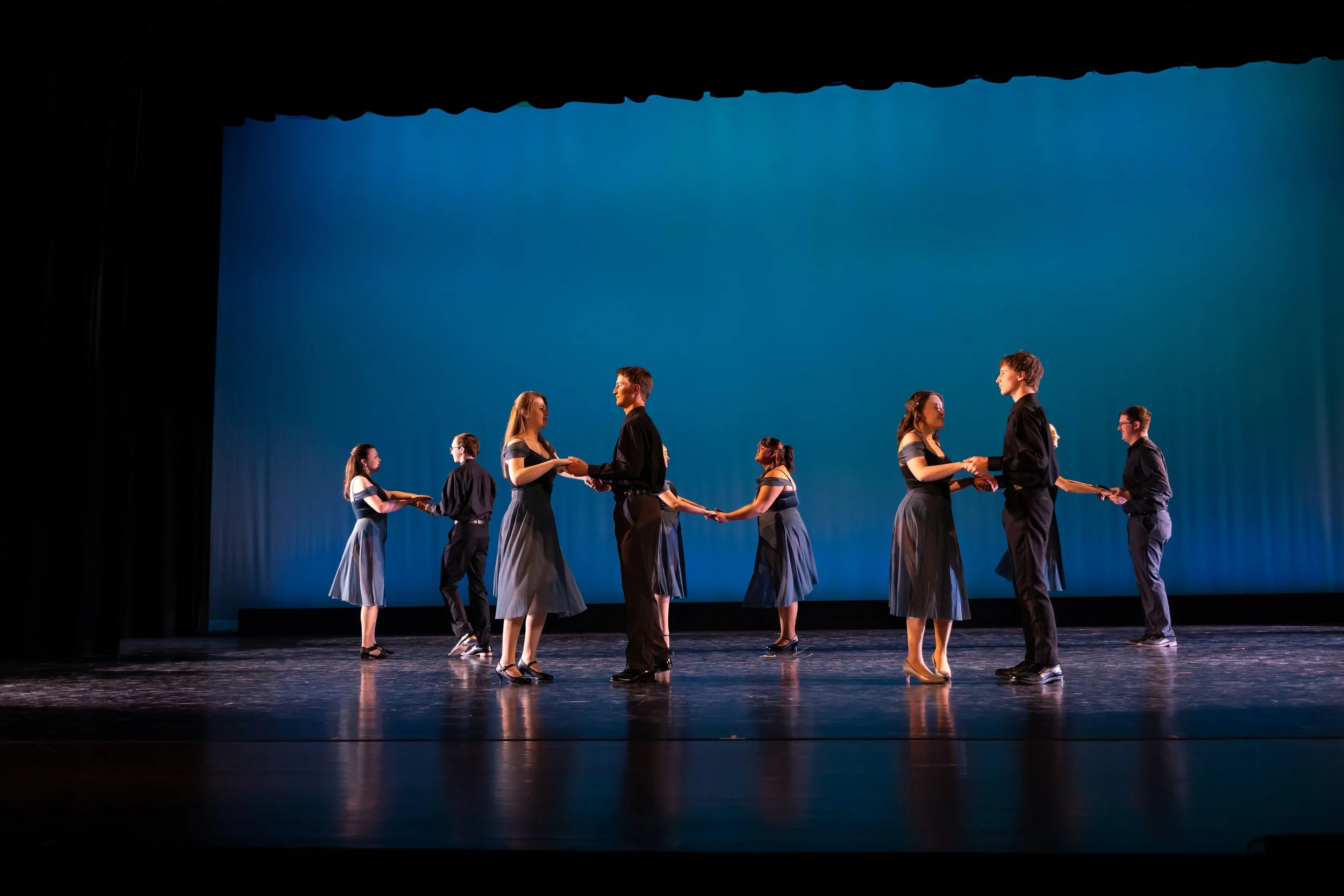
Ballroom dancing is a unique discipline within the dance industry. With roots planted deep in tradition and European royalty, it’s one of the only styles that has evolved over time as both a social activity and as a judged sport. Both trajectories are seeing a modern-day resurgence driven by a post-pandemic desire for social connections and television shows like Dancing with the Stars—but how did this style of dance go from courts to crowds? Whether you’re preparing for the Daddy-Daughter Dance, brushing up on your footwork before the summer wedding season, or looking for ways to diversify your dance resume, there’s plenty to gain from a brief history of ballroom dancing.
The earliest ballroom dances date all the way back to the Renaissance, when promenade-style dances like the Minuet and Pavane were performed by elite society in the royal courts of England, Italy, and France. Throughout the 19th century, as court dances moved away from aristocratic displays and more toward crowd-pleasing entertainment, the side-by-side step sequences and group dances developed into more intricate footwork performed within a two-person framework. Dances like the waltz and polka were born from incorporating folk traditions into that traditional framework, and the rise of public dance halls made learning the art more accessible to the working class.
The Jazz Age of the early 20th century brought new dances like the Foxtrot and Quickstep, which moved away from fixed sequences, opting for more independent movement across the floor. (Read more about how the rise of jazz music influenced the dance industry here!) The first ballroom dance competition, held in Paris in 1909, led to even more formalized techniques, the foundation of the DanceSport organization, and the emergence of both Latin and Standard styles. Today, while it’s not a medaled event, DanceSport is recognized by the International Olympic Committee, with many advocating for ballroom dancing’s eventual inclusion in the Summer Olympic Games.
As the jazz era drove ballroom dancing forward, rising stars like Vernon and Irene Castle brought partnered styles to the forefront of dancing in the United States. Their fast-paced style was showcased on Broadway and in silent films between 1910 and 1920 before Fred Astaire and Ginger Rogers took over the craze with blockbuster films throughout the 1930s. The Hollywood influence cemented ballroom’s glamorous, mainstream appeal, and drove the development of Americanized smooth and rhythm-style ballroom dance technique.
Today, ballroom technique and traditions are taught throughout the world, offering dancers of all levels and disciplines a unique blend of technical, physical, and mental benefits. Ballroom dancing enhances partnering skills, musicality, and posture. It strengthens core muscles, improves balance, and boosts cardiovascular health through structured movement. It also fosters connection, adaptability, and cognitive skills, making it a valuable addition to any dancer's training.
Ballroom Dancing at Turning Pointe Dance
● Fridays, 6:30-7:30 p.m.
What to Expect:
Turning Pointe’s ballroom dance class will introduce the basics of the American Smooth and American Rhythm styles of ballroom dancing. Students will develop posture, coordination, balance and control through a series of steps designed to carry each couple effortlessly across the dance floor. Upon completion, each student will have the ability to recognize and match each style of dance to the appropriate style of music and perform the basics and beginning supplemental steps of waltz, foxtrot, tango, east coast swing, salsa, cha-cha, and rhumba. Perfect to prepare for weddings, social dancing, or a unique workout. No partners necessary! Students should plan to wear comfortable clothes and shoes with rubber or suede soles. Heels for females are preferred but not necessary.