
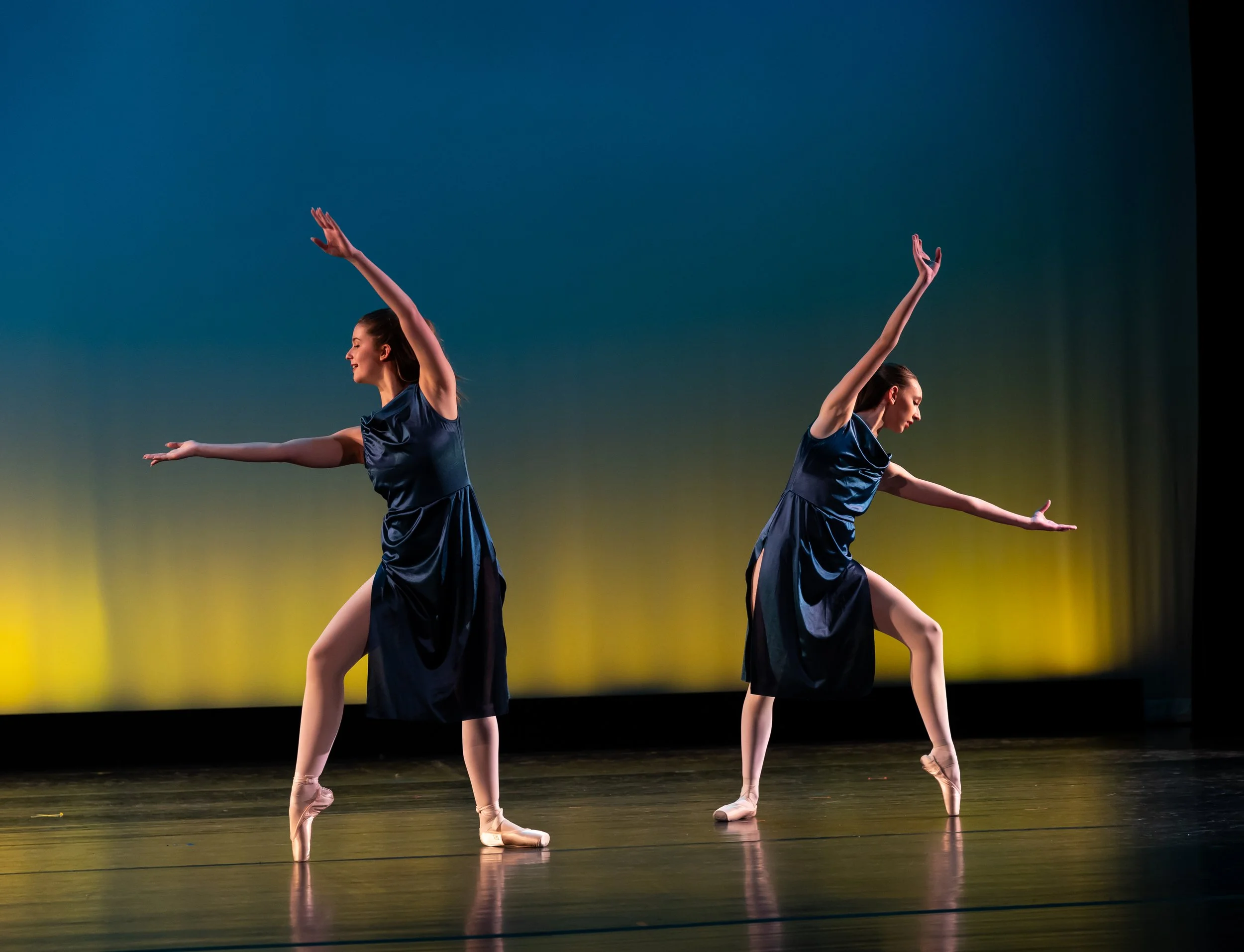
When most people think of ballet, they think of pointe shoes—and with good reason! Pointe work creates the dramatic, elongated, and elegant aesthetic that is essential to classical ballet. It proves technical mastery that allows for unique artistic expression, and for ballet dancers, it also represents a milestone that requires years of preparation to build the necessary strength and technical expertise. More than that, it demonstrates the advancement of technical innovation within the dance industry, and allows ballet dancers to be part of these historical developments.
So what developments led to the pointe shoes we see on stage today? And why were these specialized shoes created in the first place? Ready to learn more? Read on for a brief history of dancing on pointe—and how you can start your pointe journey at Turning Pointe Dance.
Believe it or not, pointe work didn’t start with shoes at all. In fact it all started in 1796, when French dancer Charles Didelot created a wire rigging system that lifted dancers onto their toes to create the illusion of dancers “flying” within their choreography. By 1823, Italian ballerina Amalia Brugnoli was able to create the same effect, not with complicated wiring, but with sheer foot and ankle strength using lightly darned, soft slippers. Then in 1832, Marie Taglioni—a prominent figure in Italian romantic-era ballet—became the first dancer to perform a full-length ballet, La Sylphide, on pointe. This feat celebrated pointe technique and how it can be used to effectively convey ethereal, romantic characters by gently “floating” across the stage. Her shoes notably lacked a hard box, requiring immense strength and technical control.
In the late 19th century, Italian dancers such as Pierina Legnani pushed for harder, flatter-toed shoes to facilitate faster footwork and turns using pointe technique. At the start of the 20th century, Russian prima ballerina Anna Pavlova helped make this vision a reality, working to develop the first sturdy pointe shoes that resemble the pairs worn around the world today. These early pointe shoes used layers of fabric, glue, and stiffer leather soles to provide support.
As ballet dance continued to evolve with both technological and scientific advancements, so did the anatomy of pointe shoes. Today, each pointe shoe is comprised of eight parts, including the shank, a thick leather “spine” that runs along the bottom of the foot to hold dancers up on their toes; the box, a rigid compartment that supports the toes themselves; the platform, which creates a flat space to balance on at the bottom of the box; and the wings, which extend from the sides of the box to stabilize the ankle. There are more than 80 brands of pointe shoes sold worldwide (though only a handful dominate the industry), all of which are still carefully handmade. Students are set up for success with a wide range of customizable padding, in-person shoe fittings, and an extensive training and evaluation process for promotion to pointework that encourages both physical enjoyment and career longevity.
Dancing on Pointe at Turning Pointe Dance
Where you’ll start: Students working toward dancing on pointe will enroll in the school-year session pre-pointe class. This class is a pre-requisite for pointe work at Turning Pointe Dance, and is designed for students ages 11 and up who have had at least 2-3 consecutive years of ballet training. Why? Dancing on pointe is serious business, and keeping students safe is our number one priority. We want our pointe students to enjoy their pointe journey free of injuries, dancing on their toes for many years to come.
Pre-pointe students will need to bring a yoga mat, beach/bath towel, foam roller, and tennis ball to class. Each April, pre-pointe students are assessed by our team of pointe teachers to determine strengths and areas that need improvement heading into summer pointe evaluations. Taking a minimum of two weekly ballet technique classes along with pre-pointe is preferred for a successful and positive experience.
After completing the pre-pointe class, students are invited to sign up for August pointe evaluations. Through this process, students are observed by our team of pointe teachers as they complete a series of stretches and exercises designed to demonstrate whether or not a dancer is safely ready for pointe shoes. Each student is given a “yes” or a “keep practicing” at the end of their evaluation, as well as their evaluation forms from all three instructors within the week to provide feedback and encourage continued development.
What comes next: Students who are approved for pointe shoes in August will enroll in the Pointe 1 class for the next school-year session. Together as a class, Pointe 1 students will be professionally fitted for pointe shoes, and learn how to sew and tie them properly. Students will then progress through Turning Pointe’s progressive pointe curriculum, advancing when level-appropriate proficiency is shown. Pointe students will participate in the annual spring recital. The expected duration in each level is approximately 2-3 years, though every student’s journey is different. Students who are asked to show more improvement before enrolling in Pointe 1 are encouraged to re-enroll in pre-pointe class, using feedback from their evaluation forms to continue their development before being re-evaluated the following year.
Get started: Pre-pointe is offered in our 2026 six-week summer class session Mondays from 5:30-6:30 p.m. Fast Track Registration for the 2026-27 school-year session runs May 15-June 1. Open registration begins July 15.